Journal / Field notes
D’A Film Festival Barcelona 2026: Our Favorite Films and Moments
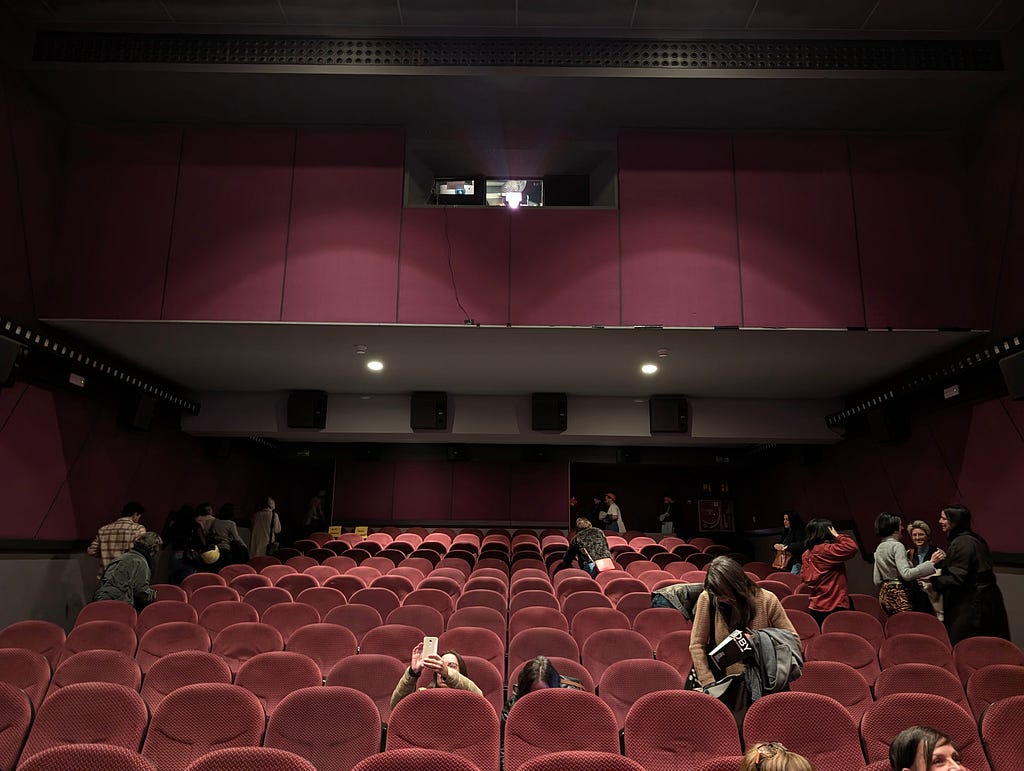
The D’A Film Festival Barcelona has established itself as a premier showcase for contemporary auteur cinema, blending the works of legendary directors with the boldest new voices in independent filmmaking. For its 16th edition in 2026, the festival once again transformed the city into a hub for cinephiles, prioritizing artistic freedom and singular narratives.
Our path to this year’s event was a direct result of the success of our short film Metro Hours, directed by Davit Margaryan, which won the Second Jury Award at the Subtravelling Film Fest 2025. This achievement led to an invitation to screen the film as part of the official D’A program during the Curts Subtravelling event, placing our work alongside other celebrated finalists and winners.
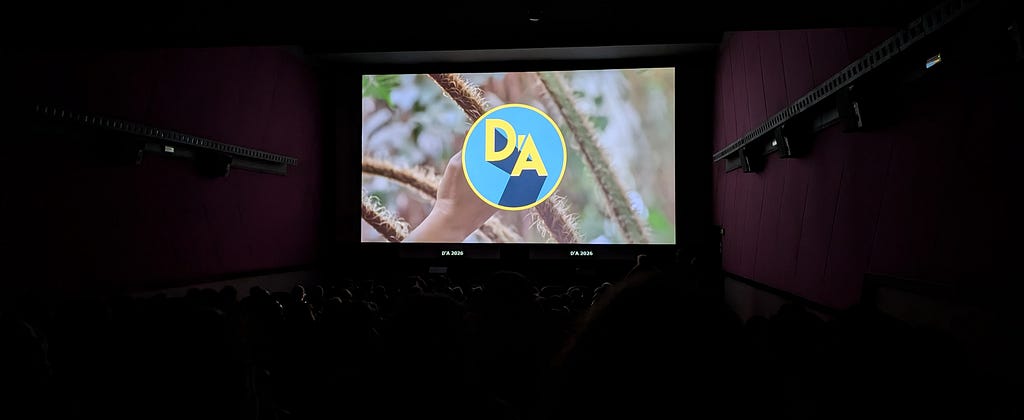
In this publication, we offer our take on the films we saw and our experience at the festival. We will take you through the films we watched, one by one, before highlighting the official winners at the end.
Two Seasons, Two Strangers
Catching Two Seasons, Two Strangers at the festival was a standout moment for us. Written and directed by Sho Miyake, this Japanese drama follows a female scriptwriter navigating the quiet shifts in her life. Remarkably minimal yet deeply emotional, the film intentionally eschews a traditional narrative structure.
It serves as a poignant reminder of the nuance in Japanese emotional expression often characterized by a controlled, interiorized grace. Rather than placing feelings center stage, the characters navigate their loneliness and need for connection with a quiet, reserved dignity. This approach highlights a distinct hallmark of Japanese storytelling: narratives that are observant and simple, yet capable of taking sudden, surreal detours.
The film is, in a way, very minimal and deeply emotional. It does not have a typical beginning and ending, maybe because it is based on two manga stories, It echoes the works “A View of the Seaside” and “Mr. Ben and His Igloo” by Yoshiharu Tsuge. It might as well be described as a film about loneliness; it’s very atmospheric, funny, and really touches the soul of the viewer.
Autobiography of a Handbag
A life from the perspective of a Miu Miu handbag, that is what the film Autobiography of a Handbag (as the title suggests) is about. It is a short film directed by Katy Wang which was screened alongside two other short films, Fragments for Venus by Alice Diop and Index by Radu Muntean. It was one of our favorites at the festival for its clever visual language and original narrative, exploring different aspects of Italian life. As for the others, Fragments for Venus is a poetic speculation on black culture and a search for identity in paintings and in everyday street life. Index was a silent and visual piece about a man searching for a mysterious wild female in the forests.
It subtly convinces you to take care of your belongings prompting the whimsical, slightly haunting thought: “What if they have feelings?”
The film highlights our tendency to cherish material things only when they are brand new, often discarding or forgetting them once they show wear or when a newer version arrives. It captures a specific kind of abandonment : a feeling nobody ever wants to experience.
Rose of Nevada
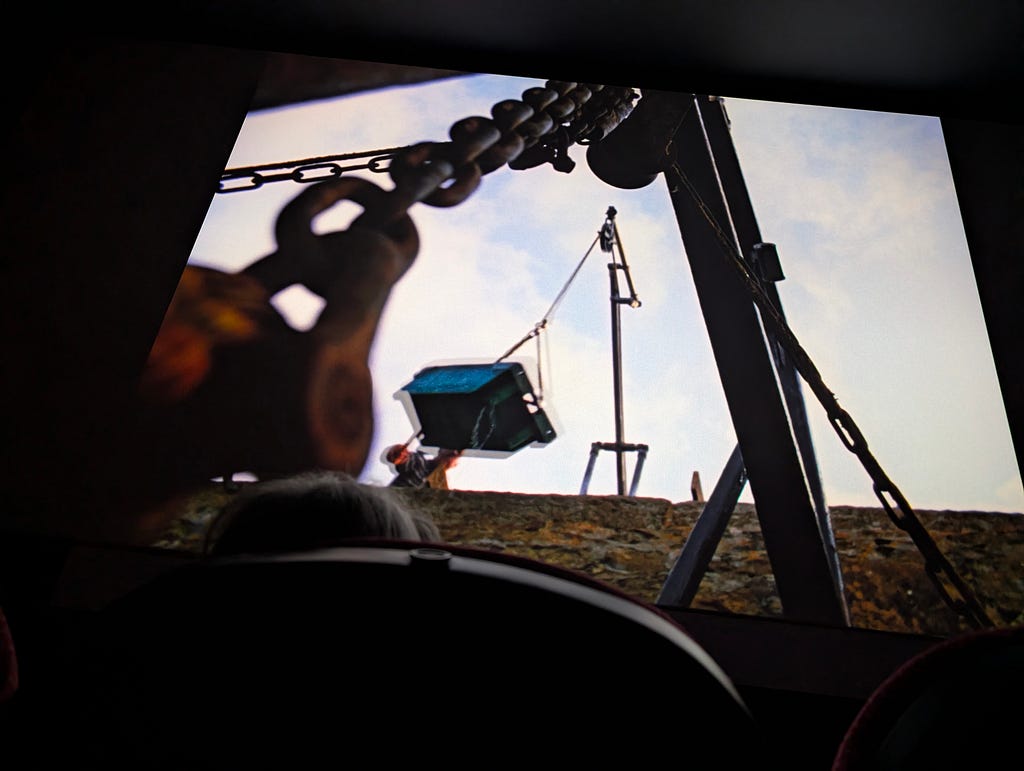
Rose of Nevada opens with a series of evocative establishing shots, rich with texture: rusted metal, rain-slicked streets, thick mud, and deep cracks in weathered walls. As a producer, I found myself wondering which came first: a location so storied and evocative that it was simply waiting to be used, or a script so specific that it demanded these exact, weathered settings. In either case, the result is a masterclass in authenticity.
Directed by Santi Trullenque, the film proved to be a disorienting and striking addition to the festival lineup. It has a bold visual style and carries a cold, isolated atmosphere that feels somewhat reminiscent of Robert Eggers’ The Lighthouse. The plot follows two young fellows who set out on a fishing trip on a boat that was once lost, and after returning from their trip, they find themselves time travelled back in time. The eerie transition between eras is handled with a mastery of suspense that kept us questioning the nature of the characters’ reality until the very last frame.
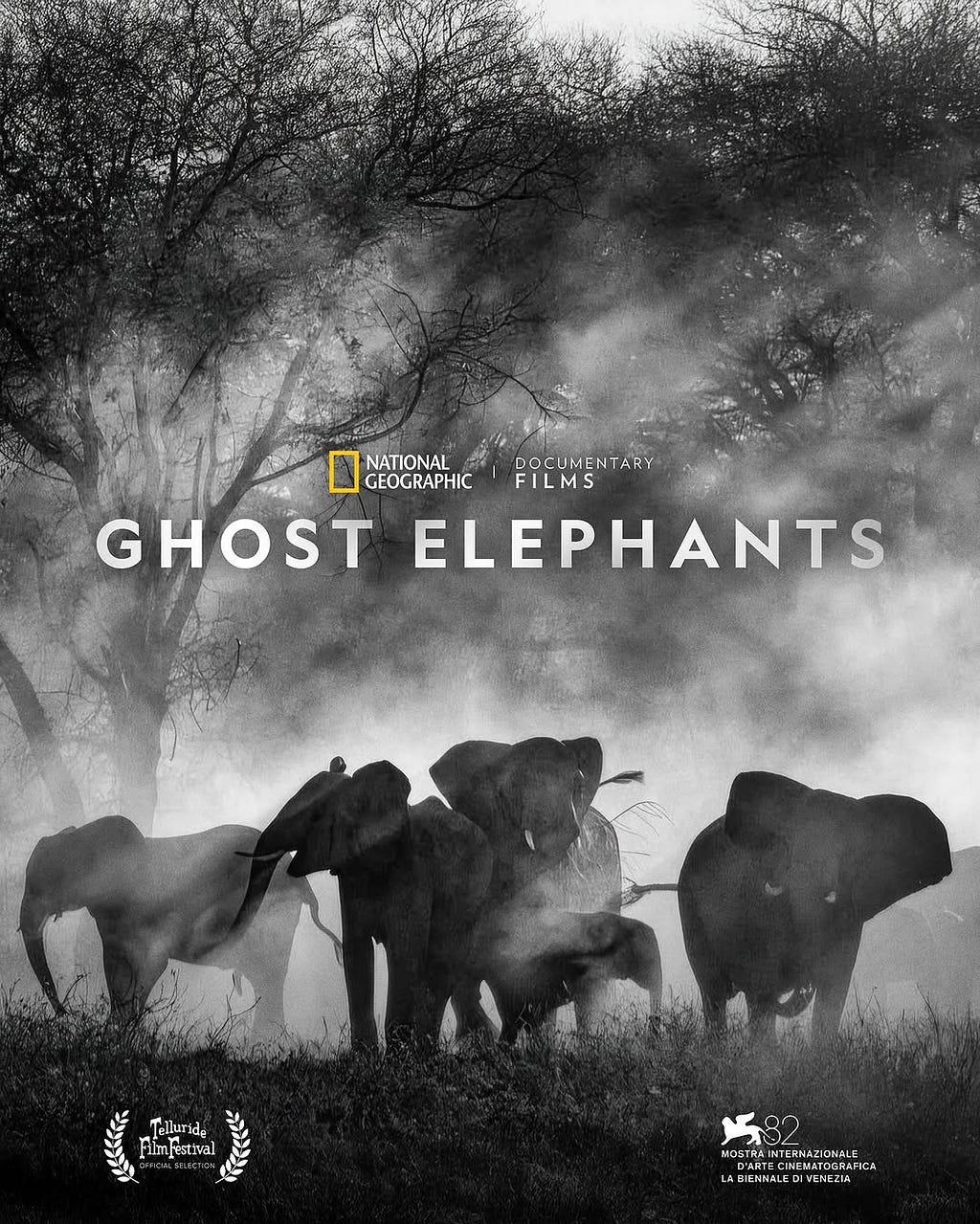
Ghost Elephants
“We don’t deserve elephants.” This is the phrase that kept echoing in my mind long after the credits rolled. The film is deeply piercing, forcing us to confront the staggering ignorance and heartlessness of human history. It highlights a dark era specifically during the 30s and 40s when a lack of understanding led us to treat these majestic creatures as mere trophies or collectibles. It is a sobering reflection on how our failure to “know better” pushed such a noble species to the brink of extinction.
Captivating from the first frame, Ghost Elephants was the first screening we attended at the festival and one of the most resonant ones. This documentary, directed by the legendary Werner Herzog, follows conservationist Dr. Steve Boyes on an obsessive quest through the exotic Angolan highlands to find a mythical herd of giant African elephants. Alongside the main quest, the film also showcases the daily life of remote African tribes with great detail. It was a nice environmentalist documentary, in a way similar to the shows on nature channels, which is not surprising as the film is distributed by National Geographic Documentary Films.
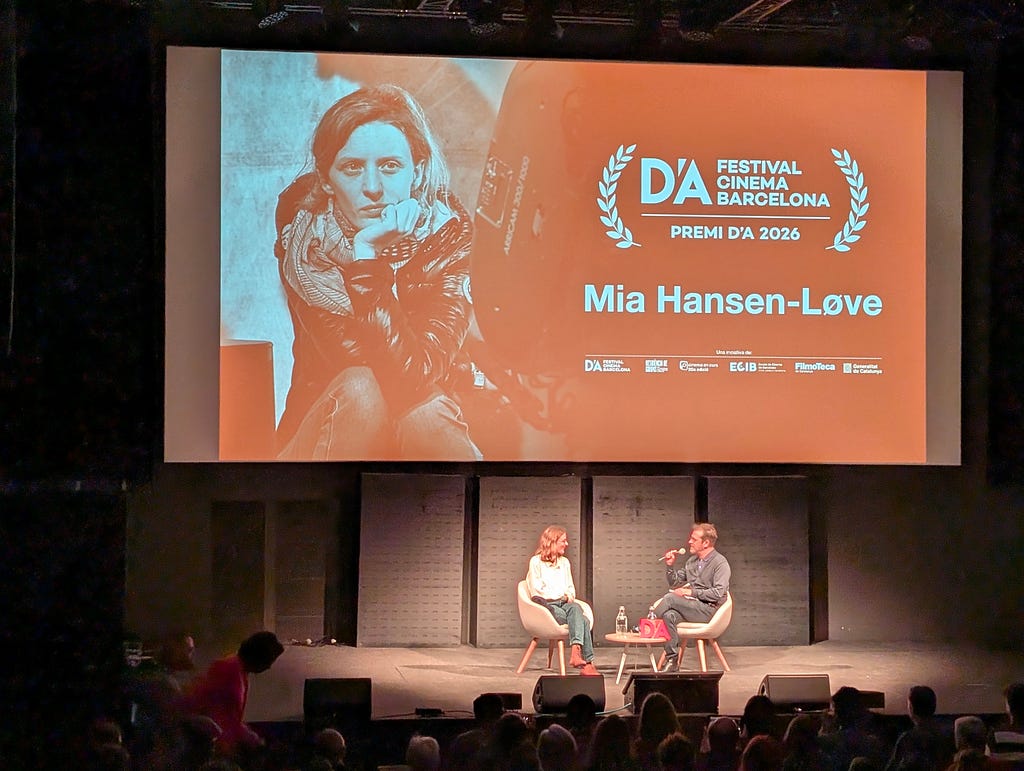
Premi Mia Hansen-Løve
A significant moment of the festival was the tribute to the French director Mia Hansen-Løve, who was awarded the 2026 D’A Prize for her career. Attending this event provided a thoughtful look at a filmmaker who has consistently defined contemporary auteur cinema with her intimate and luminous storytelling. It was a privilege to hear her discuss her creative process, especially given how her work often bridges the gap between personal experience and universal emotion.
The Turin Horse
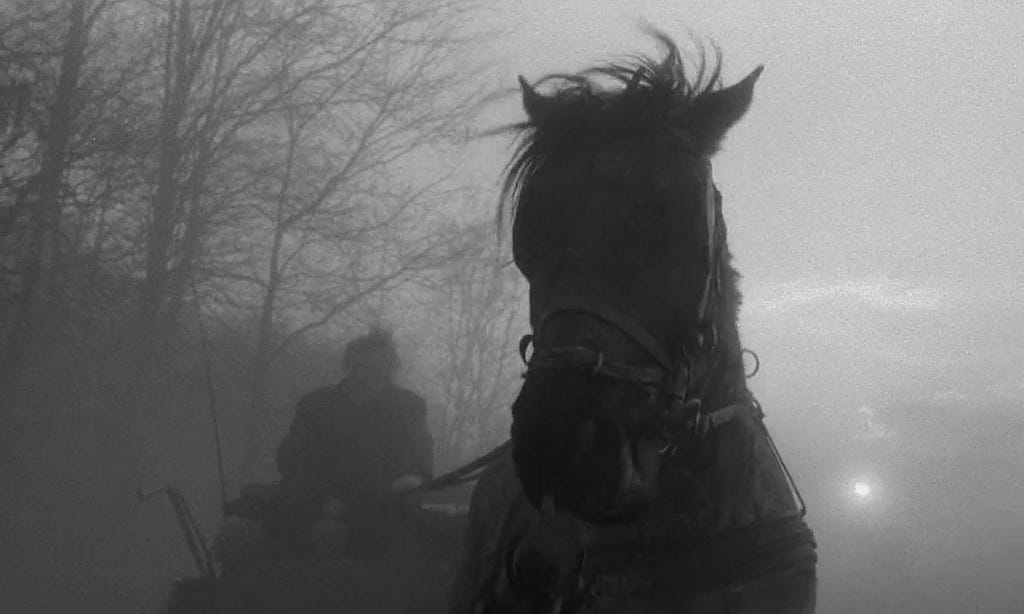
The Turin Horse opens with a visceral, arresting scene: a horse and its master struggling against a relentless, gale-force wind. The imagery is so powerful it leaves you wondering, “How on earth was this shot?”
The film captures the grueling monotony of life in total isolation, battered by perpetual bad weather. There is no electricity, no neighbors, and nothing to eat but potatoes. The score is as redundant as the characters’ daily routines, reminiscent of the Requiem for a Dream soundtrack using a driving, repetitive motif that synchronizes with the narrative’s progression. Much like Requiem, The Turin Horse pushes its story toward an inevitable breaking point, forcing the audience to sit in discomfort and ask: “How much more of this can I take?
The film is so masterfully executed that I found it almost unbearable to watch; yet, immediately afterward, I felt compelled to dive into the “behind-the-scenes” footage to understand how they achieved it. That is the mark of a truly powerful film.
El caballo de Turín (The Turin Horse) was particularly poignant as it served as a tribute to the late Béla Tarr, who passed away about two months ago. This 2011 avant-garde film is defined by its unique visual language, deliberate pace, and a heavy atmosphere that demands total immersion from the viewer. The film remains a monumental example of cinematic minimalism and artistic endurance.
Vainilla
To round out our screenings, we watched Vainilla, a Mexican drama directed by Mayra Hermosillo. Set in the late 1980s, the film follows eight-year-old Roberta as she watches the seven women in her family, spanning three generations, struggle to save their home from mounting debt. It is a film about growing up and the formation of identity within an unconventional household, captured with a warm atmosphere, a sense of humor and a distinct stylistic identity.
Metro Hours (Curts Subtravelling)
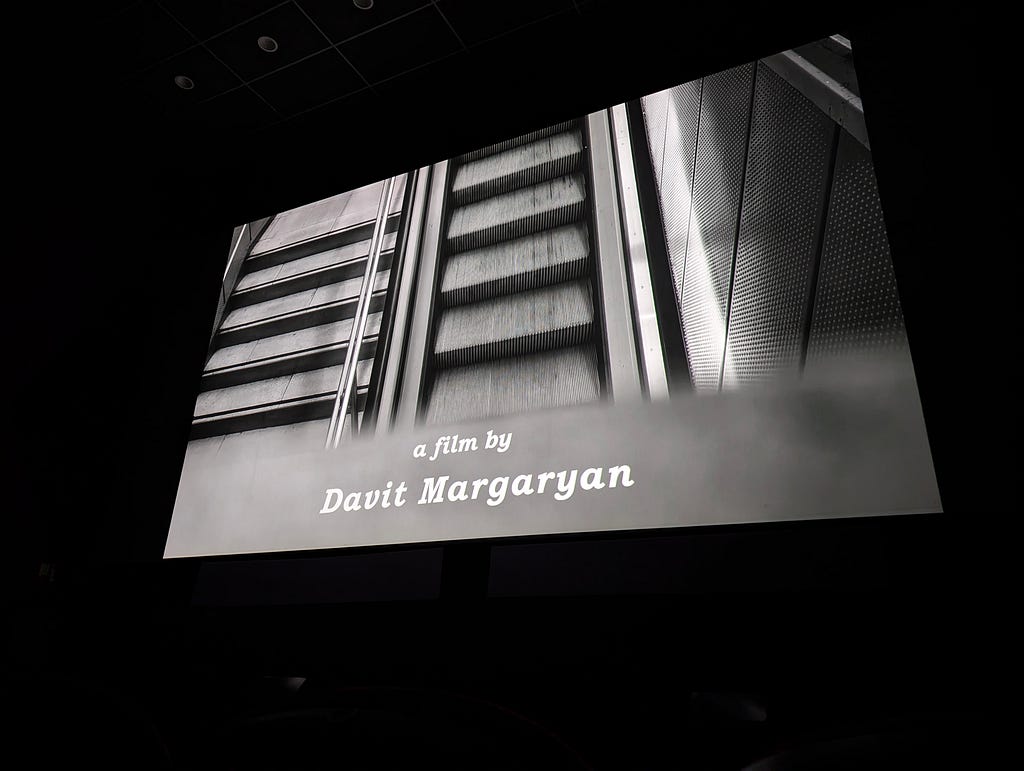
Naturally a personal highlight for us was the screening of our own short film, Metro Hours, showcased during the Curts Subtravelling event alongside a strong selection of other finalists and winners. It was a rewarding experience to see the film on the big screen in this setting, especially as it was met with hearty applause from the audience.
The 2026 Awards
The festival concluded by celebrating the most outstanding works of this edition. The Talents Award was given to Kingdom by Michał Ciechomski, which stood out for its striking aesthetic and political depth. The Un Impulso Colectivo Award went to El vol de la cigonya by Soumaya Hidalgo Djahdou and Berta Vicente Salas, with a special mention for Anoche conquisté Tebas by Gabriel Azorín.
The Critics Award (ACCEC) and the Green Talent Award were both awarded to Estados generales by Mauricio Freyre. In the short film categories, Llenya by Manel Raga won the Un Impulso Colectivo Short Film Award, and the Young Jury Award went to Barrio triste by Stillz. Finally, the Audience Awards were presented to Un mundo frágil y maravilloso by Cyril Aris for best feature and Dalia by Águeda Sfer for best short film.
You can view the full list of winners and official details on the festival website: https://dafilmfestival.com/en/palmares-da-2026/